Cotswold Stone, Slate and Clay: Cleaning Bath's Traditional Roofs
Roofs in and around Bath are more varied than they first appear. Look up as you walk from the city centre out towards the villages, and you will see everything from thick natural stone slates on old cottages to smooth Welsh slate on Georgian terraces and warm clay tiles on later homes. Each material has its own character, its own way of ageing, and its own needs when the time comes to clean it.
Understanding what covers your roof is more than idle curiosity. It shapes how the roof should be looked after, why it might be attracting moss, and what a good cleaner will and will not do to it. This guide runs through the traditional roof coverings common in the Bath area and how to keep each one clean without causing harm.
The quick answer: Bath roofs are typically covered in natural stone slate, Welsh slate or clay tiles, all of which are best cleaned with a gentle low pressure soft wash rather than a pressure washer that can crack, erode or dislodge these traditional materials.
1. Natural stone slate, the local classic
In the countryside around Bath and on many older buildings, you will find roofs covered in natural stone slates. These are thick, heavy and often laid in diminishing courses, larger at the eaves and smaller towards the ridge. They give a roof a wonderful, textured, timeless look that sits perfectly with the region's stone buildings.
That texture is also why they attract moss. The naturally rough, porous surface holds moisture and gives spores an easy grip, so stone slate roofs often green over readily, especially on shaded slopes. The stone can also be brittle, and individual slates can crack or delaminate with age and frost.
Cleaning them calls for a light touch. The weight and irregularity of stone slates, combined with their brittleness, means a high pressure jet is a real risk. A gentle soft wash lifts the growth without stressing the stone or dislodging slates.
2. Welsh slate on the Georgian terraces
Bath's grand Georgian and Victorian terraces are frequently roofed in Welsh slate, the thin, flat, blue grey covering that became the standard across Britain in the nineteenth century. It is elegant, long lasting and beautifully suited to the clean lines of the city's architecture.
Age is slate's weak point. Over the decades slates can delaminate into thin layers, and the nails holding them corrode and fail, leading to the slipped and missing slates you often see on older roofs. Weathering also roughens the once smooth surface, letting moss and lichen take hold.
Because aged slate is fragile and prone to slipping, it should never be pressure washed or walked on carelessly. Careful access and a low pressure clean are the only sensible approach, protecting both the slates and the watertightness of the roof.
3. Clay tiles on later homes
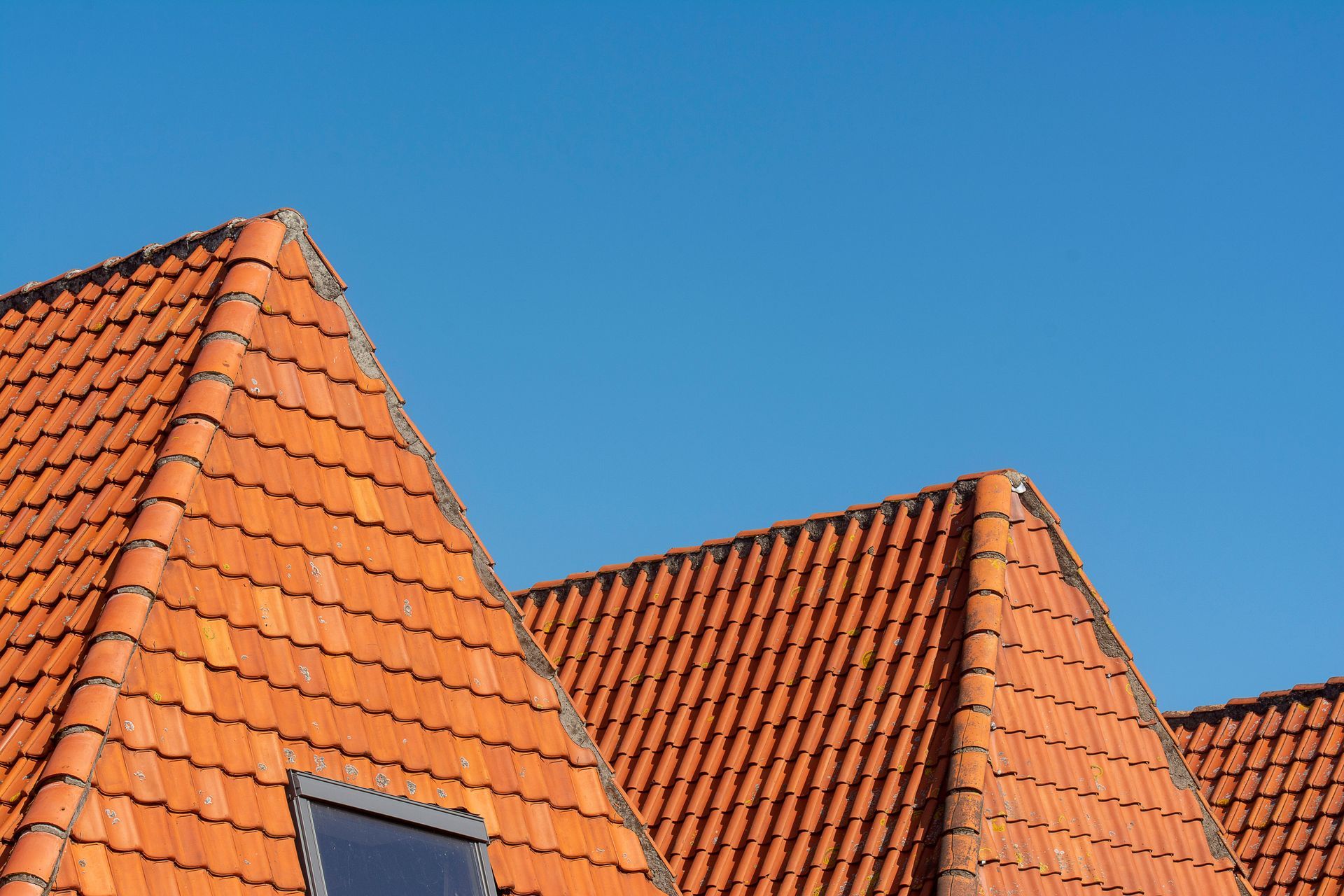
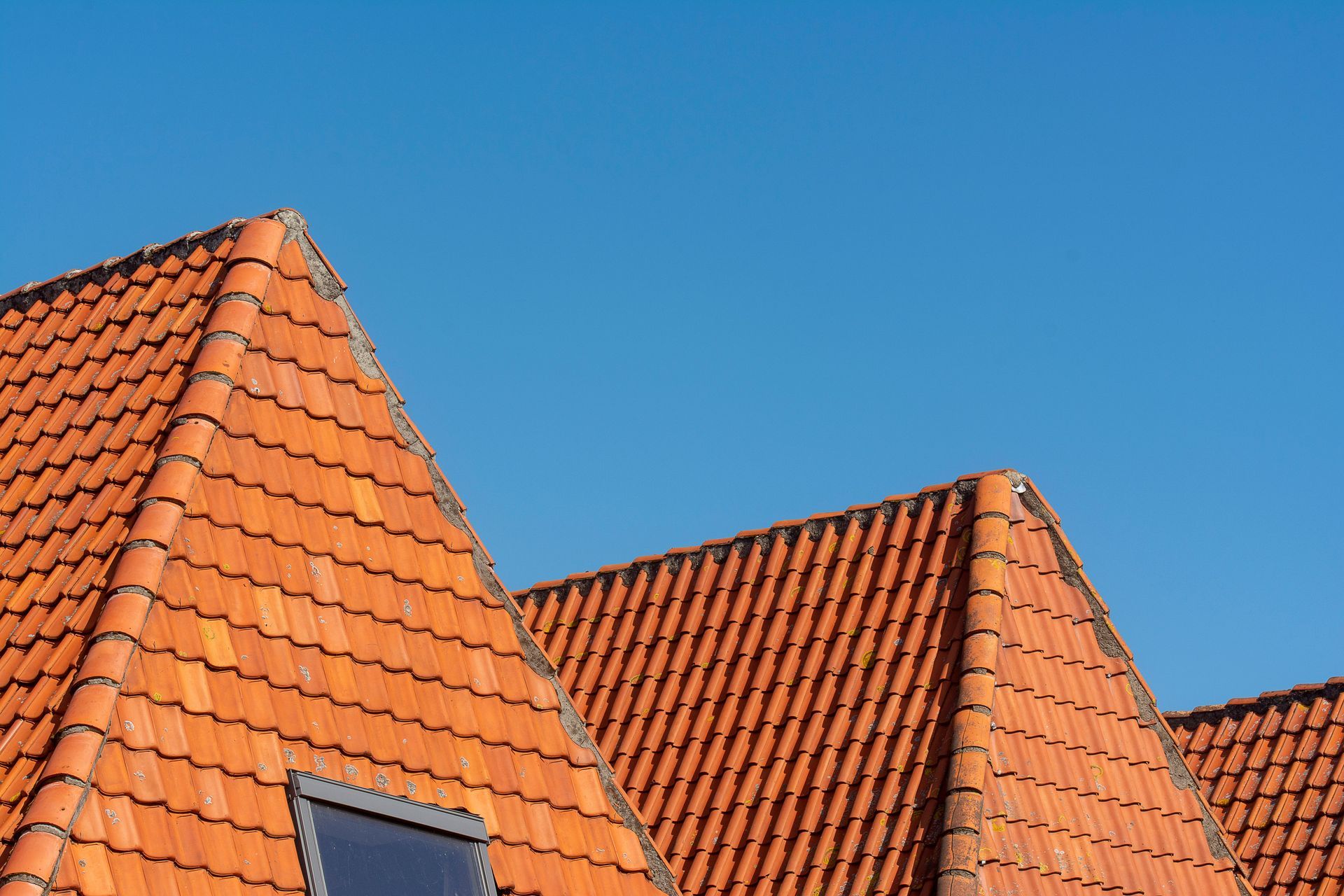
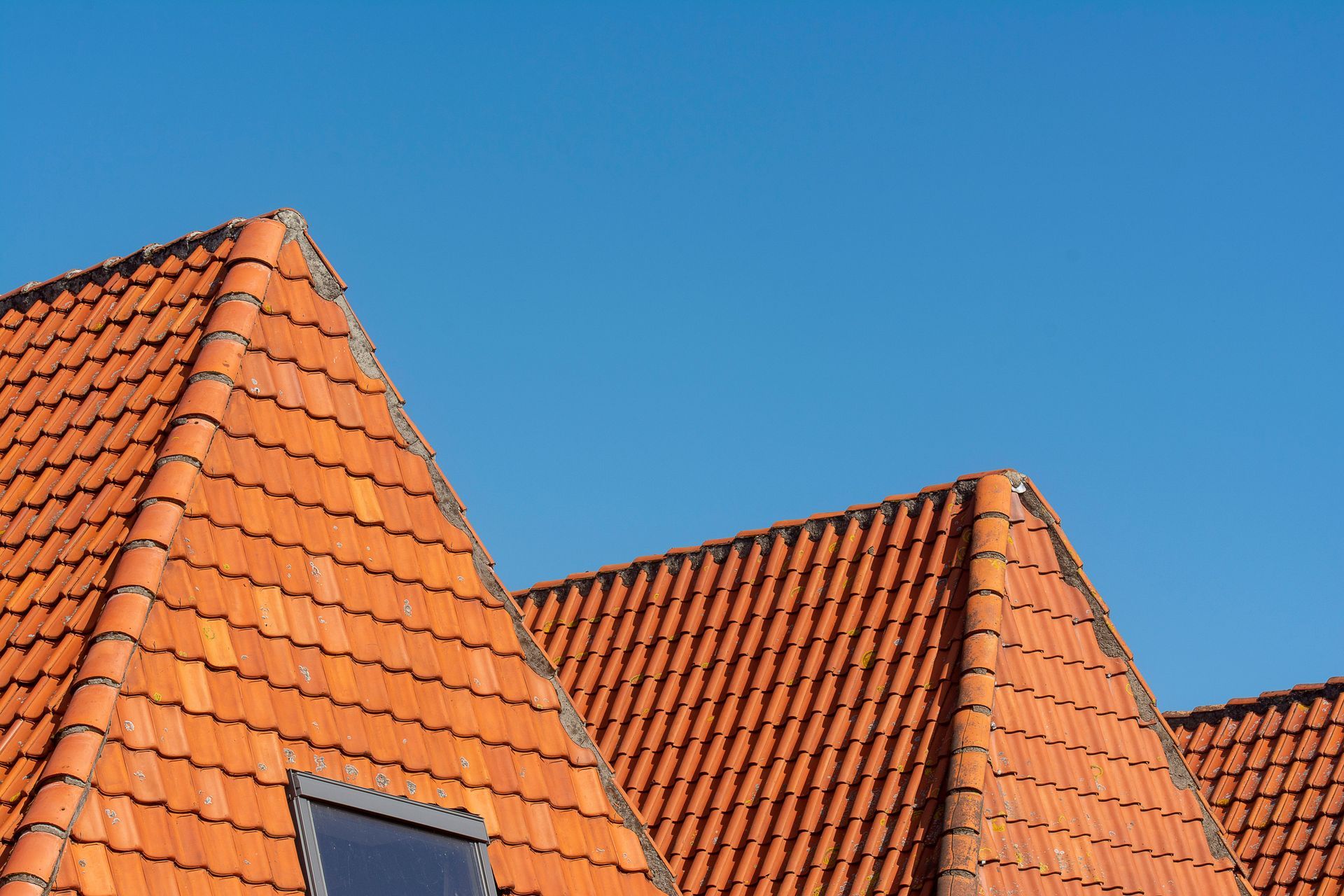
Many of Bath's later Victorian, Edwardian and twentieth century homes are roofed in clay tiles, bringing warm red and brown tones to the streetscape. Fired from natural clay, they hold their colour well and have a pleasing, traditional appearance.
Clay weathers over time, developing a softer, more absorbent surface that moss colonises easily. Individual tiles can also become brittle and crack, particularly after hard frosts. As with the other materials, the details such as ridges and valleys tend to need attention before the open slopes do.
A gentle clean suits clay just as it suits slate and stone. Blasting weathered clay with a pressure washer can strip its surface and crack tiles, whereas a soft wash removes the growth and rinses it away at low pressure without damage.
4. Why the method matters more than the material
The common thread across stone, slate and clay is that none of them responds well to force. Each is a natural or traditional material that has aged in place, and each can be cracked, eroded or dislodged by a powerful jet. The single most important decision is not which product to use but how gently the roof is treated.
Soft washing answers that. By pairing low pressure water with a biocide that kills moss, algae and lichen at the root, it cleans all three coverings thoroughly without stress. The growth dies and clears, and the roof is left intact.
The biocide keeps working on the surface for months afterwards, slowing regrowth in Bath's damp valley climate. That means the roof stays cleaner for longer and needs disturbing less often, which is exactly right for traditional materials you want to preserve.
5. The details that need checking on any Bath roof
Whatever the covering, the vulnerable points are usually the same. It is worth knowing what to look out for, because a fault in the details can let water in even when the main slopes look perfect:
- Ridge tiles and their mortar , which can work loose or crumble with age.
- Valleys between slopes , where leaves and moss collect and cause blockages.
- Lead flashing around chimneys, parapets and abutments, which can lift or split.
- Slipped or cracked individual tiles or slates , easiest to spot after windy weather.
- Blocked or overflowing gutters , which send water down the stonework below.
A thorough clean is a natural moment to check all of these, catching small problems before they become expensive ones.
6. Getting the right advice for your roof
Because Bath's roofs vary so much, a proper look by someone who knows local buildings is worthwhile. They can identify the covering, judge its condition, and recommend the gentle approach that traditional materials need. Just as importantly, they will know how to access a roof safely on the city's tall terraces and steep hillside streets.
The right professional never treats every roof the same. Stone, slate and clay each deserve care matched to the material, and all of them deserve the gentle soft washing method rather than a pressure washer.
Frequently Asked Questions
How do I know if my roof is stone slate or Welsh slate?
Stone slates are thick, heavy and irregular, often laid larger at the bottom. Welsh slate is thin, flat and uniform in a blue grey colour. A professional can confirm at a glance.
Do stone slate roofs attract more moss?
They can, because their naturally rough, porous surface holds moisture and gives spores an easy grip. Shaded stone slate roofs often green over readily and benefit from regular gentle cleaning.
Can any of these roofs be pressure washed?
None should be. Stone can erode, slate can crack and slip, and clay can lose its surface. A low pressure soft wash is the safe method for all traditional coverings.
Does cleaning restore the colour of my tiles?
Removing moss, algae and grime brings back much of the original tone, especially on clay. It cannot re colour genuinely weathered material, but the improvement is usually clear.
How often should a traditional Bath roof be cleaned?
It varies with shade and tree cover, but every few years is typical. The lasting protection from a soft wash extends the gap between cleans.
Not sure how to care for your Bath roof?
Ben's Roof Cleaning cleans stone, slate and clay roofs across Bath and the surrounding area, with over 15 years of experience and a method matched to your covering. Get in touch or call 01225 234933
for a free, no-obligation quote.
The right care for every kind of Bath roof
From the thick stone slates of the surrounding villages to the Welsh slate of the Georgian terraces and the clay tiles of later homes, Bath's roofs are a study in traditional materials. What unites them is a need for gentle handling. Match the care to the covering, choose low pressure soft washing over brute force, and keep the details and gutters in good order. Do that, and whatever kind of roof you have will stay clean, sound and characterful for many years.